

Learning to Walk Again: A Lesson in Leading Bravely
- Rosanna María Salcedo
- Dec 4, 2025
- 3 min read

This reflection is part of the work I explore more deeply in Leading Bravely, the book I’m writing about resilience, loss, and the courage it takes to rebuild a self when everything familiar has changed. If you are navigating your own unexpected life—your own broken body, broken heart, broken plan—my hope is that you will find recognition here, and maybe even possibility.
Bravery is not always loud. Sometimes it looks like walking slowly. Sometimes it looks like asking for help. Sometimes it looks like choosing to live—with intention, tenderness, and hope—inside a body you are still learning to love.
For most of my life, my strength lived in motion—walking fast, hiking long distances, moving through the world without hesitation. Then cancer, surgery, and a stroke changed the landscape of my body. This is the first time I’m writing about what it feels like to inhabit this new physical reality—not just the medical details, but the emotional terrain.
Ten months ago, I had a hemipelvectomy. Half of my pelvis—the entire left side—was reconstructed, and my hip joint replaced because cancer was destroying it. The tumor was removed. Twenty years ago, this surgery would have required the amputation of my entire left leg. I am profoundly grateful for the carbon-fiber and titanium holding me together.
The surgery lasted seven hours. When I woke, my side was lined with roughly seventy-five stitches from knee to waist. The goal was to improve my quality of life, and in many ways, it did. The chronic pain that had shadowed me for months was suddenly gone. But in its place was something else—I could no longer walk.
Learning to walk again has been slow, aching work. Bone, muscle, tendon, and nerve had all been severed or disrupted. Even now, after months of physical therapy, parts of my leg remain numb; some muscles still don’t respond; tendons hesitate to support what they once held with ease. I have progressed from a walker, to crutches, and now to a cane. That is progress. But my mobility will never be what it once was. I may never run again. I can accept that. What is harder to accept is that—even with the cane—I still need another person beside me when I walk outdoors. Cancer treatment has weakened me further: twenty-five pounds lost, appetite gone, fatigue constant. A stroke during surgery compromised my left side even more.
Only now am I beginning to understand the emotional weight of all of this.
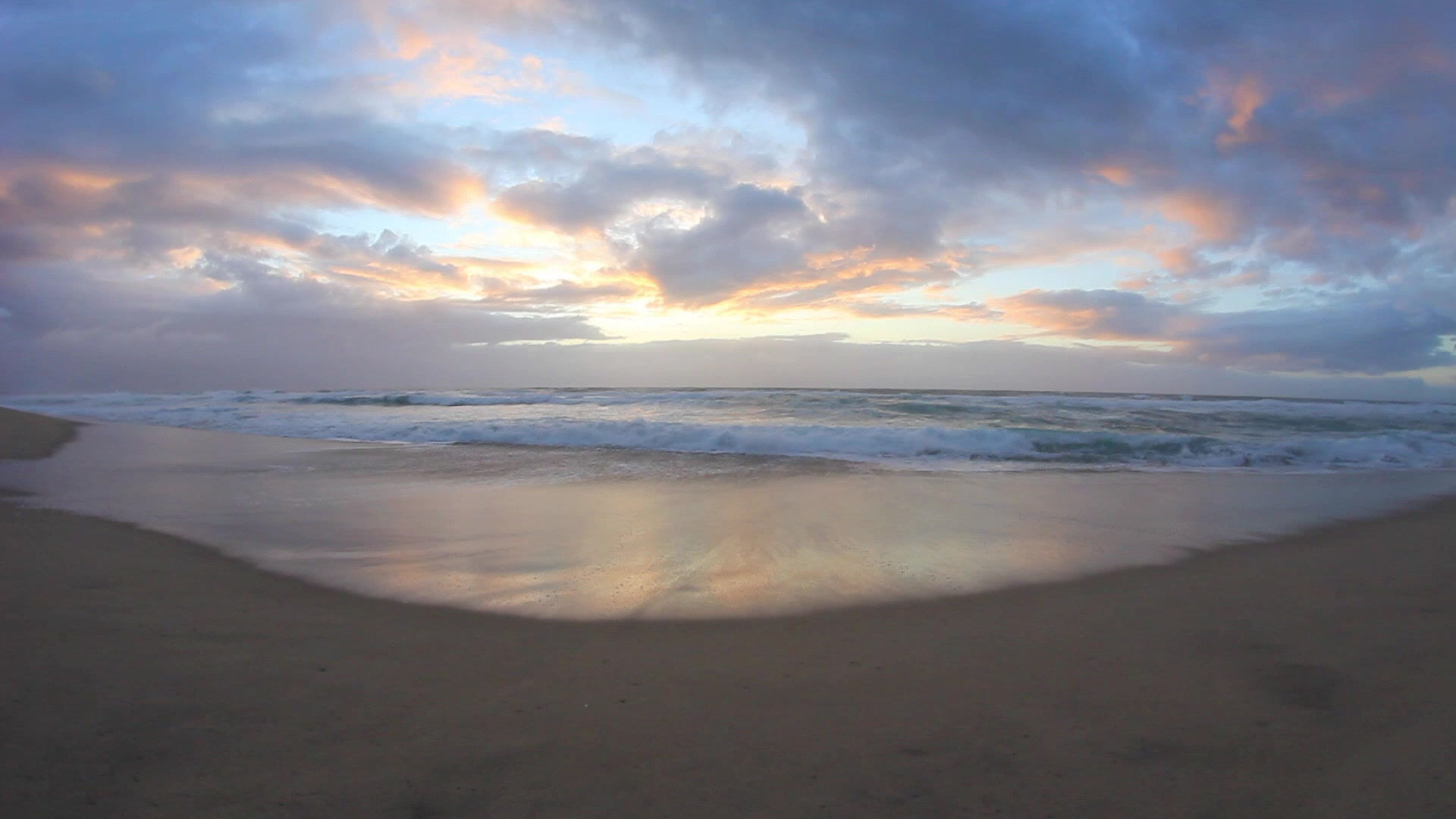
My husband and I love being outdoors. We hike, we swim, we explore. Since I’m not working and he can work anywhere with Wi-Fi, we decided to spend a month in the Dominican Republic—somewhere we’ve always dreamed of living part-time after retirement. We chose the Samana Peninsula: remote, lush, salt air, ocean at the door, forest at our backs. A place we’ve always felt free.
But this time, I discovered a truth that broke me open.
To move through the airport, I needed a wheelchair—something we hadn’t anticipated. Once there, I couldn’t walk long distances. I couldn’t manage uneven ground or sand. I couldn’t enter the ocean without my husband holding me steady against the waves. Heat made my leg swell. Fatigue pulled me down like gravity. Every step was effort; exploration, exhaustion.
I was suddenly living inside a body that felt unfamiliar—fragile, dependent, limited.
As someone who has built a life on autonomy, strength, and self-reliance, this has been an emotional reckoning. I cannot move through nature the way I once did. I cannot wander, climb, or even stroll the beach without support. The things I once did without thinking now require negotiation, caution, and help. I am learning, sometimes painfully, what it means to navigate the world with physical challenges.
I am humbled. I am grieving. And I am learning.
This, too, is a kind of loss—one that requires a new way of being, a new relationship with my body, my environment, and my independence. I don’t yet know what living fully looks like from here, but I am beginning the work of finding out.
Because even in limitation, life asks us to keep living.
I don’t share this for sympathy—I share it because loss comes in many forms. Sometimes it’s not the loss of a person or a dream, but the loss of ease, movement, freedom. And like every loss, it asks us to adapt, to grieve, and eventually—slowly—to grow in a new direction.
I am learning to build a life inside this new body. A life with slower steps, maybe smaller distances—but also deeper presence, softer gratitude, and a tenderness I could never have accessed before.
This is not the life I expected. But it is still a life worth living bravely.



Comments